
Hello Bregdan Woman!
Writing this letter broke my heart. I hope it breaks yours, as well.
And because this story is still being played out in a different format, almost every day, my heartbreak continues.
Thank God for this Bregdan Woman who is fighting to change things!
I’m doing my small part by making sure you know.
Cheryl Horn’s fight began when the unthinkable happened. Her best friend’s 16-year-old daughter, Selena Not Afraid, went missing in Montana in 2020.
Regrettably, it has become a too often realized fear for Indigenous families. If you don’t know, Indigenous refers to American Indians and Alaskan Natives – the people who were here long before white people came to claim what is now called the United States of America.
The unthinkable is happening far too often.
It is usually girls who go missing.
Here’s a sobering statistic for you. Montana has about one million people. 6.7% of them are Indigenous people. If you’re slow at math, like me, that’s 67,000 people. Despite the small population, Indigenous people make up about 26% of the missing persons cases in the state. Most of them are female.
That number is horrifying.
Montana is not alone. Other states with Indigenous populations (most US States) report high instances, as well.
What makes it more sobering is that nobody knows what the true number is because many cases go unreported. Others aren’t well-documented, and no government database specifically tracks them. The actual number of missing and murdered women is simply unknown.
No one has cared enough to know.
Let that sink in…
No one has cared enough to know.
Up until “the call” came, Cheryl would scroll through social media, find a notice of a missing Indigenous girl, feel a few moments of regret and outrage, and then keep scrolling. It was all too much to process.
Cheryl is a citizen of the Fort Belknap Indian Reservation in Montana. She is a member of the Assiniboine Tribe. She is known as Magazu Nahzi, which means Standing in the Rain.
She quit simply scrolling the day “the call” came.
Her beloved Selena, whom she had helped raise, had gone missing at a highway rest stop.
As soon as Cheryl received notice, she threw clothes in a bag, hopped into her car, and drove 350 miles to help search.
The family put out urgent pleas for help in the search via Facebook. Dozens responded. Drones were on site on day one. A helicopter joined the search, as well. Eight days in, there was a sharp turn in the weather, moving from balmy 40- to 50-degree days to temps below 30 with a biting wind.
The search continued.
Hope remained alive. Surely, with so much help, they would find Selena. They kept searching.
Cheryl posted relentlessly on Facebook. She was determined to keep Selena in the spotlight. She was determined to make sure people didn’t just scroll by. She organized search parties… printed flyer after flyer… and educated her community and beyond about the plight of unsolved crimes involving Indigenous women.
She kept Selena’s light shining – to make sure people continued to care.
19 days after Selena’s disappearance, hope died.
Her body was found less than a mile from where she had gone missing – in the exact area extensive searching had been done.
The only possible conclusion was that she had been kidnapped, killed, and then dumped close to where she had gone missing. Law enforcement offered another theory that she had wandered off and died of exposure. Not one of the searchers believes that is true.
Especially Cheryl Horn.
She has been fighting for justice from that moment forward.
I’m going to tell you some things that are hard to know, but impossible for a Bregdan Woman to ignore. Knowledge is paramount.
Indigenous women face murder rates 10 times the national average on some reservations. 10 times! That shocked me.
Equally shocking? 84% experience violence in their lifetime. 84%!
Before you think the reservations are just a dangerous place, you need to know that 67% of these assaults on Indigenous women are perpetrated by non-Indigenous people. It’s appalling!
Not many criminals are caught. Fewer are held accountable.
WHY?
It’s complicated and complex. The reality is driven by historical trauma since the days of American Colonialism and the long-term impact of residential schools where Indigenous children were imprisoned. That will be a letter for another day.
These girls and women are vulnerable. They’re seen as easy prey.
I hope that after you learn this, you’ll dig deeper to discover the truth and then let your voice become part of demanding a solution.
That’s what Cheryl Horn is doing.
She fights for more than Selena. She fights for the thousands of Indigenous girls and women who have been murdered or are missing.
In Cheryl’s words: “When you’re going through searching for your loved one and you’re actually out there knowing that you’re the only one searching, it’s really eye opening and life changing. I just kept promising myself that I wouldn’t stop, that I’ll help other people.”
Horn pledged to speak for all families statewide that believe their loved ones have fallen victim to sex trafficking, drug abuse, kidnapping, or partner or spousal abuse. She’s persuaded volunteers, nonprofit organizations, state officials, and law enforcement agencies to provide resources to bring women home – or at least offer closure when the worst becomes reality.
Experience has taught her that it is the WOMEN who go out and search.
The WOMEN who will persevere until their loved ones are found.
This Bregdan Woman encourages other women to discover their power and to make things happen.
She tells them, “Help isn’t coming… WE ARE THE HELP!”
Yes, of course she gets discouraged.
She is determined to fight to stay positive, however, so that she can help other women find their way home! Determined to help them create a new life after the fear and abuse.
She’s used to late night calls from family members who are terrified when they realize their daughter, wife, or sister has gone missing. She understands their terror and feelings of helplessness.
Eighteen months after Selena went missing, Cheryl became a victim liaison with the Montana Board of Crime Control.
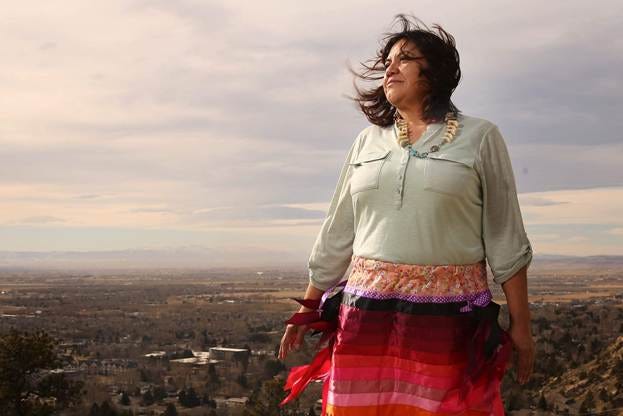
Her responsibilities are going throughout the state and working with tribal communities to figure out the gaps and needs they have with victim services.
She realizes how far she has come since the day Selena went missing.
“I’m not the victim anymore. I’m not the grassroots advocate. I feel like I leveled up a little bit to where I’m actually effective. And I can be effective, and I can help make positive changes. I can bring positive programs and things to all the tribes.”
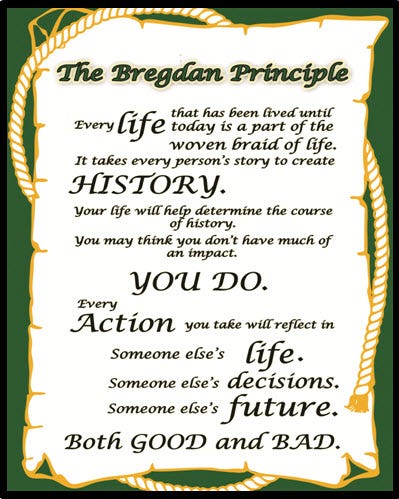
THAT is what a Bregdan Woman does. They turn darkness into light. They bring hope and power to the hopeless and powerless.
They take painful experiences and work to create change.
Your question for the day?
What can you do to bring light??
What will you do today to impact history??
I’m on this journey with you!
Ginny
On the show Marshalls they have been doing the exact same story. It is a shame it took so long.