Letter 11 - The Stolen Generation Didn't Steal Her Dream!

Hello Bregdan Woman,
This story began during the years known as the Stolen Generation in Australia. Just the words conjure up the horror of those years.
These were years of fear, repression, and racism – years when tens of thousands (up to 100,000 by some counts) of mixed-race Aborigine children were taken from their parents – oftentimes violently and cruelly to be forcibly integrated into white-society as the government believed they grew whiter through successive generations. Forced to live in white society, they left their Aboriginal roots and culture behind.
No, it didn’t usually work. It did nothing more than traumatize children and families.
It definitely traumatized Evonne.
This story also involves tennis.
There aren’t many sports that I don’t love, but tennis holds a special place in my heart. I started playing in high school – spending at least 3 hours a day on the court. I loved it! A little into this letter I mention something very important that happened in 1974. It was my junior year in high school. I followed tennis closely – especially Chris Evert. She was my heroine. I was stunned when she lost in Australia to…
I’m getting ahead of myself.
Whenever I learn about remarkable athletes, the thing I’m most interested in is what they had to overcome in order to excel at their sport – what they had to overcome to be physically, mentally, and emotionally tough enough to excel on the national and international stage.
Evonne Goolagong was no exception.
It’s still tough if you’re born Aborigine in Australia, but it was especially tough when Evonne was born in 1951. The years from 1905 to1967 were known as the Stolen Generations (also known as the Stolen Children). Just the words make my skin crawl.
I’m going to throw in a little history and knowledge for you.
Aboriginal Australians possess the oldest continuous culture on Earth, with evidence of habitation dating back 50,000 to 65,000 years. Originally migrating from Asia, they developed complex societies, over 250 language groups, and a deep spiritual connection to "Country". European colonization in 1788 caused devastation through disease and violence, leading to a long history of resistance and survival.
The Stolen Generation was part of their heartbreaking history.
The Australian government literally kidnapped these children from their parents as a matter of policy. White welfare officers, often supported by police, would descend on Aboriginal camps, round up all the children, separate the ones with light-colored skin, bundle them into trucks, and take them away. If their parents protested, they were held at bay by the police.
Most were treated badly, kept for cheap labor, and oftentimes abused. You should read more about it if you are interested. I could write many letters about this, but my goal right now is to help you understand Evonne Goolagong – a remarkable Bregdan Woman.
Evonne was lucky enough to not be taken away as one of the Stolen Generation, but she remembers shaking with fear when she had to hide under her bed while men roamed the streets looking for children to kidnap. I can easily imagine her terror as she waited to see if she would be ripped away from her family.
Evonne grew up the third of eight children in a poor family. Tennis was not a sport played by Aborigine, but she was fascinated by the game – spending hours peering through the fence at the local courts. An area resident, Bill Kurtzman, went against the norms of the time and invited her in to play. Yes, he most certainly is a Bregdan Man!
Evonne’s life changed that day.
She spent every minute she could on the court, pursuing what quickly became a passion and a love.
Her life took another turn in 1965, when Vic Edwards, the proprietor of a tennis school in Sydney, heard rumors about a remarkable 14-year-old Aborigine tennis player. When he visited to see her play he immediately understood her potential and convinced her parents to allow her to move to Sydney.
She lived with the Edwards’ family, completed school, and trained in tennis. Edwards became her legal guardian, coach and manager. He opened the doors of competitive tennis to her, but their relationship was not easy. In later years, she revealed sexual advances from him. 10 years later, she broke off any personal and business relationship with him, married, and kept playing.
Evonne won 86 career singles titles, including the Australian Open (4 years in a row), the French Open, Wimbledon, and the US Open. She also won 46 career doubles titles. In 1971, she was the top-ranked female tennis player in the world.
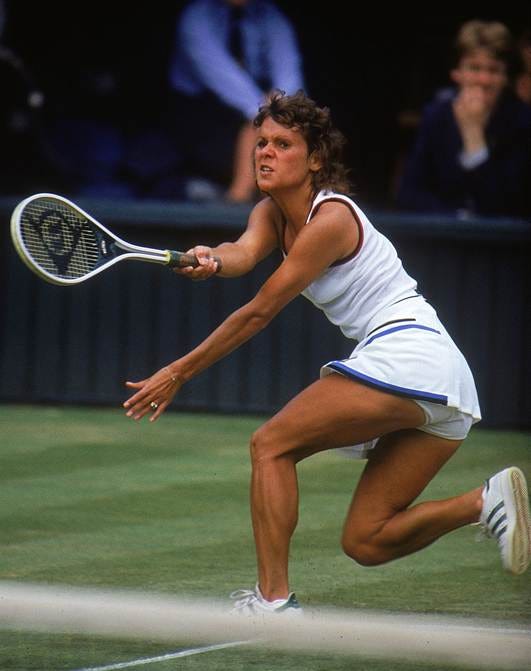
I could fill many pages with her tennis accomplishments, but one that stood out to me was in the year 1974 (remember what I mentioned earlier) when 23-year-old Evonne delighted spectators at Melbourne’s Kooyong Tennis Club by defeating American Chris Evert (my own high school heroine) to win the women’s singles Australian Open championship.
Evonne was the FIRST Aboriginal person to win an Australian tennis title.
On the surface, it looked like Evonne’s victory transcended race and racial politics. But just like any sport that has their first racial breakthrough, she continued to face years of virulent racism, insults, and shocking behavior. Things were definitely not okay in Australian racial politics. Steps have been made to improve Aboriginal rights, but it’s a struggle that continues today.
I loved how Evonne responded when she was pestered about being Aborigine when she won tennis tournaments.
“I feel I’m the only real Australian here.”
How right she was!
Depending on the source, the Aboriginal people have been in Australia somewhere between 45,000 to 80,000 years ago. That’s a long time.
On the other hand, the Australians who created the Stolen Generations only arrived in 1788.
Let’s see… 237 years vs 45,000 – 80,000 years. Hmmmm…
England decided to colonize Australia for the sole purpose of creating a penal colony where they could ship their convicts and undesirables. It wasn’t long before the Aborigine were seen as a problem they needed to be free of.
Life has been a struggle for the Aborigine ever since.
All Evonne wanted to do was play tennis.
It had to have taken equal (or more!) amounts of energy to fight the prejudice and bigotry aimed at her every day.
Her determination to do what she loved, and what she was so good at, is what makes her a Bregdan Woman.
Her determination to strengthen herself physically, mentally, and emotionally – no matter what challenges she faced – is what makes her a Bregdan Woman.
When her tennis playing career ended, she continued on with the sport she loved through product endorsements, developing her own clothing brand, playing in senior invitational competitions, and she traveled to America to spend some time as a touring professional.
She has worked tirelessly in Australia to promote women in sports – especially Aboriginals. She runs an annual “Goolagong National Development Camp” that encourages Aboriginal children to stay in school through playing competitive tennis.
She is an icon in Australia – a true Bregdan Woman!
She is only 74 today. I hope she has decades more to leave her mark on her people, her country, and her sport!
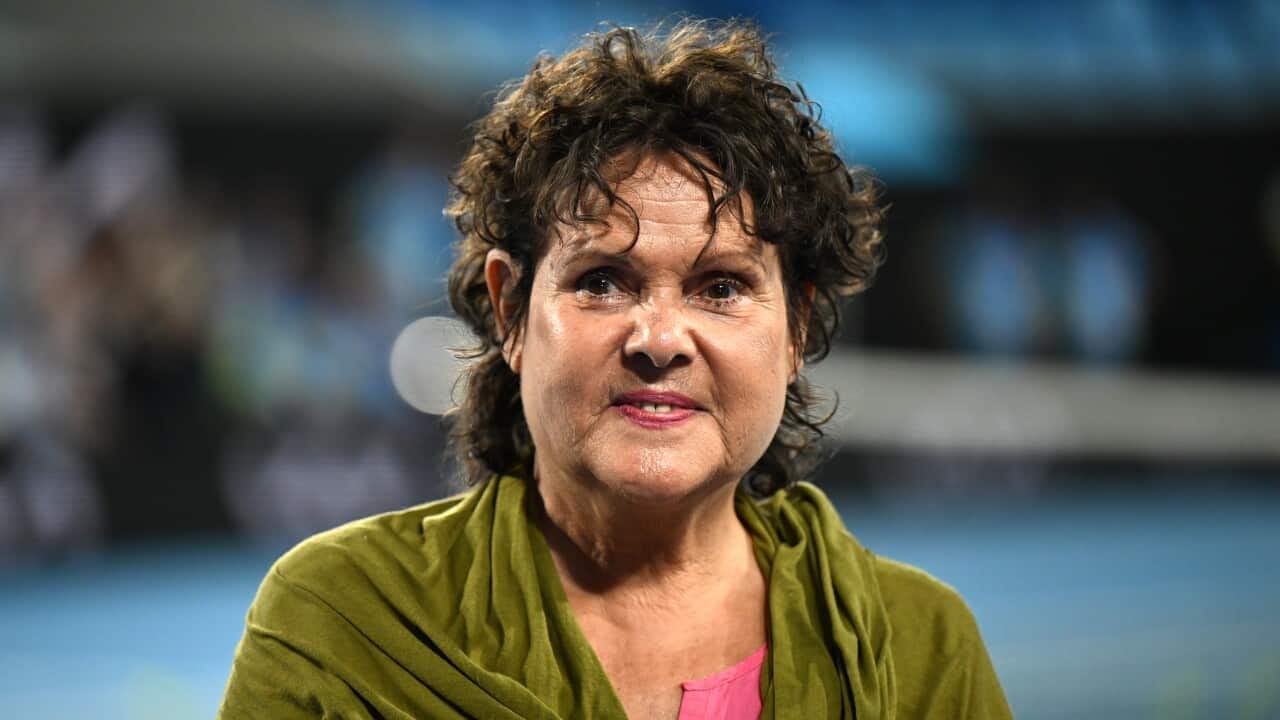
I know only a handful of women will go on to play competitive tennis. That is NOT what this story is about…
This story is not about what Evonne did - it’s about the person she had to choose to become and be, in order to do what she did.
It’s about a Bregdan Woman who was determined to do whatever it took to fulfill her dreams and accomplish things no other woman had at that time.
Here’s your question for the day…
What person will YOU choose to become and be??
*************
And, of course, what will you do today to impact history?
I’m on this journey with you!
Ginny
I was watching a lot of tennis nearly 1980s. Don't remember seeing Yvonne play. Unfortunately, the same story was repeated over and over again with all native lands that were invaded or settled, depending on your point of view by the Europeans. The Alaskans, the Hawaiians, the natives in the United States.
And in so many other places.
Your inspirational stories remind me to notice the people that are right in front of me. Like the cashiers and the cleaning people at the hotel. And to honor them by smiling, or thanking them, or even asking if they are having a good day. 😃
Thank you for this history lesson. So much history is sad...to hear a positive story is uplifting and challenging. Thank you again.